



Cat calming collar solutions are gaining popularity among pet owners searching for drug-free relief for feline stress and anxiety. But do they really work, how safe are they, and what can you realistically expect? This comprehensive, research-backed guide breaks down what you need to know before using a cat calming collar on your cat.
Key Takeaways
- Scientific studies confirm that cat calming collars with synthetic pheromones can reduce problem behaviors like urination, scratching, and conflict, but effectiveness varies from cat to cat.
- Adverse reactions are uncommon but possible, including skin irritation and hair loss; about 7-8% of cats may experience these side effects.
- Calming collars are portable, affordable options for travel and stress triggers, but long-term safety and comparative performance data are limited.
- Cat Calming Collars: What They Are and Why People Use Them
- How to Use a Cat Calming Collar Safely: Step-by-Step
- Deeper Analysis, Downsides, and What Science Says
- Conclusion: Should You Try a Cat Calming Collar?
- Frequently Asked Questions
Cat Calming Collars: What They Are and Why People Use Them
A cat calming collar is a wearable device—typically a soft polymer or fabric collar—infused with calming agents like synthetic feline pheromones or soothing herbal extracts. The main goal is to help cats feel more secure by mimicking the chemical signals mother cats give off to comfort their kittens. Modern versions, such as the FELIWAY® Optimum collar, use a 13% synthetic pheromone complex released continuously over about 30 days.
Cat guardians often seek these collars when their pets display stress-linked behaviors—such as urine marking, excessive scratching, or fighting with other cats. Common triggers include moving homes, separation anxiety, fireworks, vet trips, or introducing new pets or family members. Unlike pheromone sprays or diffusers, these collars provide a constant, portable source of calming signals wherever your cat goes.
While not every cat responds, research shows that about twice as many cats stopped problematic behaviors using a pheromone-based calming collar compared to a basic collar. These solutions can be especially practical for travel or temporary stress. For persistent or severe anxiety, consult your veterinarian to explore medical or behavioral alternatives.
If feline stress is causing litter issues, see our automatic self-cleaning litter box guide for solutions that improve hygiene and convenience.
How to Use a Cat Calming Collar Safely: Step-by-Step
Getting the best results from a cat calming collar requires a few careful steps. Here is a clear sequence to increase success and minimize risk:
- Consult your veterinarian first. Before purchasing, check with your vet—especially for cats with skin sensitivities, chronic health conditions, or persistent behavioral problems that might need medical evaluation.
- Choose a proven product. Select a collar supported by clinical research, such as FELIWAY® Optimum. Avoid unknown brands or products with strong fragrances and untested essential oils, which could be unsafe for cats.
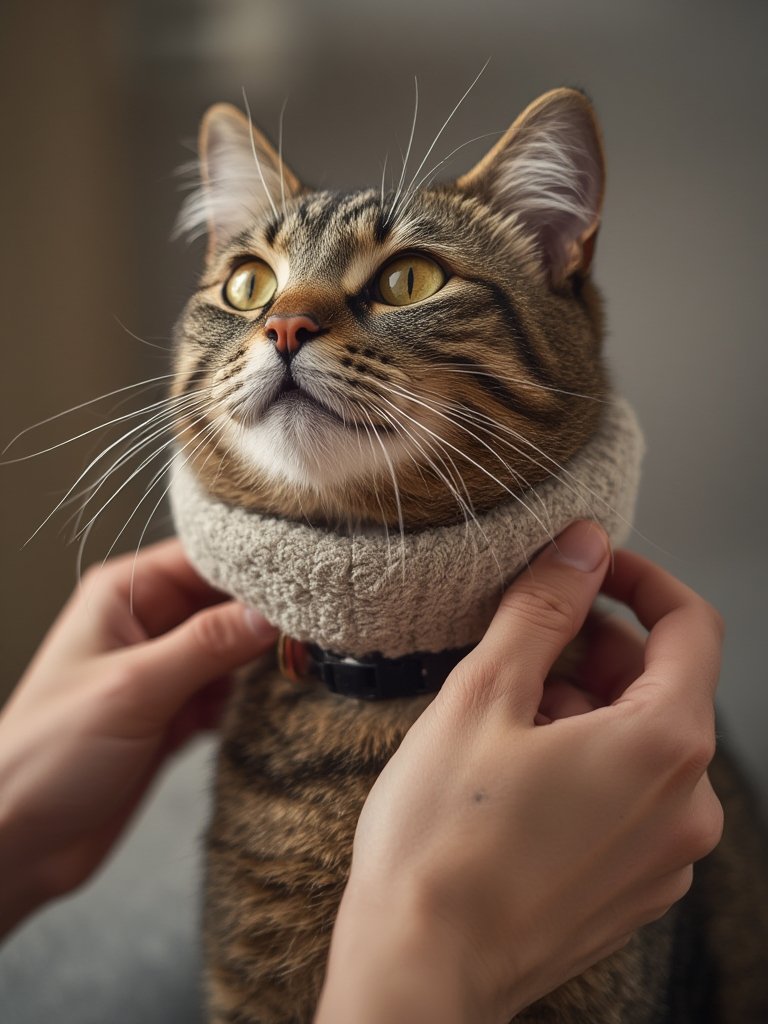
- Unwrap, size, and apply the collar correctly. Remove packaging and gently stretch the collar to activate it. Place it around your cat’s neck, leaving enough room for two fingers between collar and skin, then trim any excess length.
- Monitor closely for the first 48 hours. Observe your cat for changes in behavior, scratching at the collar, skin irritation, or signs of allergic reaction. Remove the collar and contact your vet if you notice persistent irritation or distress.
- Keep the collar on unless you bathe your cat. The pheromone is continuously released, so the collar should stay on for the stated duration (usually up to 30 days), except during bathing or as otherwise directed.
- Pair with environmental adjustments for best results. Use other calming strategies, like a dust-free tofu cat litter to reduce stress, or interactive toys such as the Yeowww! Catnip Toy to keep your cat engaged and active.
To further manage cat stress during change or noise events, set up vertical spaces and hiding spots. Invest in enrichment gear like the Catstages Tower of Tracks to redirect anxious scratching and fighting into positive play. For homes with both cats and dogs, providing a probiotic supplement for dogs can also help maintain overall pet harmony.
Deeper Analysis, Downsides, and What Science Says
While cat calming collars offer a convenient way to address feline anxiety, they are not foolproof. Recent clinical studies, such as the 2023 trial on FELIWAY® Optimum, provide promising data—but also reality checks on limitations. Here’s what to consider:
| Feature | Advantages | Potential Downsides | Research/Notes |
|---|---|---|---|
| Pheromone Collars | Portable, proven to decrease certain problem behaviors, lasts up to 30 days. | 7-8% risk of minor adverse reactions (itching, hair loss), 12% of cats remove/lose collar early, effect varies by cat. | 2023 FELIWAY® Optimum study |
| Diffusers | Ambient effect for multi-cat homes, non-contact, no risk of physical collar intolerance. | Stationary, less effective for travel/relocation; no direct comparative efficacy study in 2023. | Mentioned in user reports |
| Herbal/Essential Oil Collars | Alternative for cats unresponsive to pheromones; some anecdotal positive reports. | No robust trials, possible allergy/toxicity issues, variable results. | See market overview |
| Usage Limitations | Convenient for temporary triggers, easy for travel. | Should not replace behavioral enrichment or medical care. | Vet consultation recommended |
Pitfalls include relying on collars as a cure-all where underlying issues require veterinary or behavioral therapy. Also, roughly a quarter of cats in studies had some kind of side effect (most were mild, such as scratching), with no overall difference between pheromone and ordinary collars. Collars can be lost or chewed, and about 12% of cats removed them within 28 days.
For multi-cat households, evidence on improved inter-cat relationships is encouraging, but results aren’t guaranteed. Consistent environmental enrichment—like using a high-quality litter, regular play with kicker toys, and using enrichment structures—remains crucial.
Long-term safety data beyond 28 days is missing in current literature. For chronic stress, continuous use should be monitored and periodically reviewed with your vet.
Conclusion: Should You Try a Cat Calming Collar?
Cat calming collars backed by research—like those using synthetic pheromones—are practical, affordable tools to manage feline anxiety, travel stress, and disruption from environmental triggers. They offer most benefit for mild-to-moderate problem behaviors, with generally low risk of side effects. However, since response is individual and there are gaps in long-term data, monitor closely and always work in partnership with your veterinarian.
If your cat struggles with anxiety or sudden changes, a cat calming collar is worth considering as part of a comprehensive behavior plan. Ready to support your cat’s well-being? Talk to your vet first or explore top-rated calming collar options to help your feline live stress-free.
Frequently Asked Questions
How long does a cat calming collar last?
Most pheromone-based cat calming collars are designed to last up to 30 days. Replace the collar monthly or according to the manufacturer’s instructions for continuous effect.
What are the common side effects of a cat calming collar?
Mild side effects include skin irritation, scratching at the neck, and occasional hair loss. About 7-8% of cats in studies experienced these, and most tolerated the collar well.
Will a cat calming collar stop urine marking?
Scientific trials show calming collars can reduce problem urination and marking, but results vary. They are most effective when combined with environmental enrichment and, if needed, medical workup.
Can I use a calming collar alongside diffusers or sprays?
Yes. Many owners combine ambient pheromone diffusers with calming collars, especially in multi-cat households or during stressful events.
Are herbal or essential oil calming collars safe for cats?
Research-backed pheromone collars are generally safer. Herbal/essential oil collars may cause allergies or toxicity in some cats and lack robust safety studies. Consult your vet before use.
—nn