

Robotic lawn mower technology has become a game changer for homeowners and facility managers looking to automate their yard work, delivering crisp, evenly cut lawns with far less effort than traditional mowing methods.
Key Takeaways
- The global robotic lawn mower market is growing rapidly, with residential units dominating sales and new wireless, RTK and AI navigation technologies gaining traction.
- RTK and AI navigation technologies are redefining performance but also require careful consideration of property layout and potential limitations.
- Costs for robotic mowers are higher upfront compared to traditional tools, but maintenance tends to be lower over time.
- Robotic lawn mower: what you need to know
- How to choose and set up a robotic lawn mower
- Advanced analysis & common pitfalls
- Conclusion
- FAQ
Robotic lawn mower: what you need to know
Robotic lawn mowers have transformed yard maintenance by handling mowing automatically—no pushing, hauling, or fuel mixing. These battery-powered units quietly patrol your lawn on schedules you set and are increasingly packed with smart features. Modern models use advanced sensors, mapping, and (on top-tier mowers) GPS or RTK for navigation, eliminating the need for manual intervention after setup.

Why are robotic lawn mowers getting so much attention in 2024 and 2025? The answer lies in convenience, time savings, and market trends. According to industry reports, the global market is pegged around USD 1.99 to 8.47 billion in 2024 depending on the category, with continued growth. Residential users have the lion’s share at nearly 60% of sales, and households with medium-sized yards (501–2,000 m²) are snapping up the majority of units. Wireless robotic mowers utilizing RTK (real-time kinematic GPS) and AI-powered navigation are starting to erode the boundary wire segment.
But rapid growth doesn’t mean perfection: there are feature gaps, unclear cost-of-ownership figures, and coverage challenges in certain terrains—which we’ll tackle in depth below.
How to choose and set up a robotic lawn mower
Buying and installing a robotic mower is more involved than picking up a traditional mower. Here’s a practical flow based on the advanced capabilities and emerging pitfalls in the industry.
- Assess your yard: Note the total mowing area, slope percentage, obstacles, and narrow passageways. These factors determine the class of robot mower you need—especially if you want a boundary-wire-free experience. Slopes over ~35% will still limit many models.
- Pick the right technology: Decide if you prefer a traditional boundary wire model (less expensive but requires wire installation) or a newer wireless/AI-powered mower using RTK or camera-based navigation. RTK mowers are ideal for open lawns or spaces with minimal tree cover, since dense foliage can interfere with GPS accuracy.
- Compare essential specs: Focus on battery life (runtime per charge), charging time, cutting width (wider means faster coverage), and slope capability. Reliable data on 2025 wireless model specs is still sparse, so check for up-to-date manufacturer sheets or demo videos.
- Consider total cost: Upfront prices for smart mowers are high compared to push or ride-on models. Most reports cite lower ongoing maintenance and energy costs, but specifics for 2025 are lacking. Also factor in possible installation kits, servicing plans, and whether software updates require a subscription.
- Install and test: For wireless RTK/AI models, follow the manufacturer’s calibration process and walk the property for initial mapping. For boundary-wire models, bury or stake the wire along the perimeter and obstacles—time-consuming but generally “set-it-and-forget-it.” Always do several test runs and adjust schedules for optimal coverage and battery return trips.
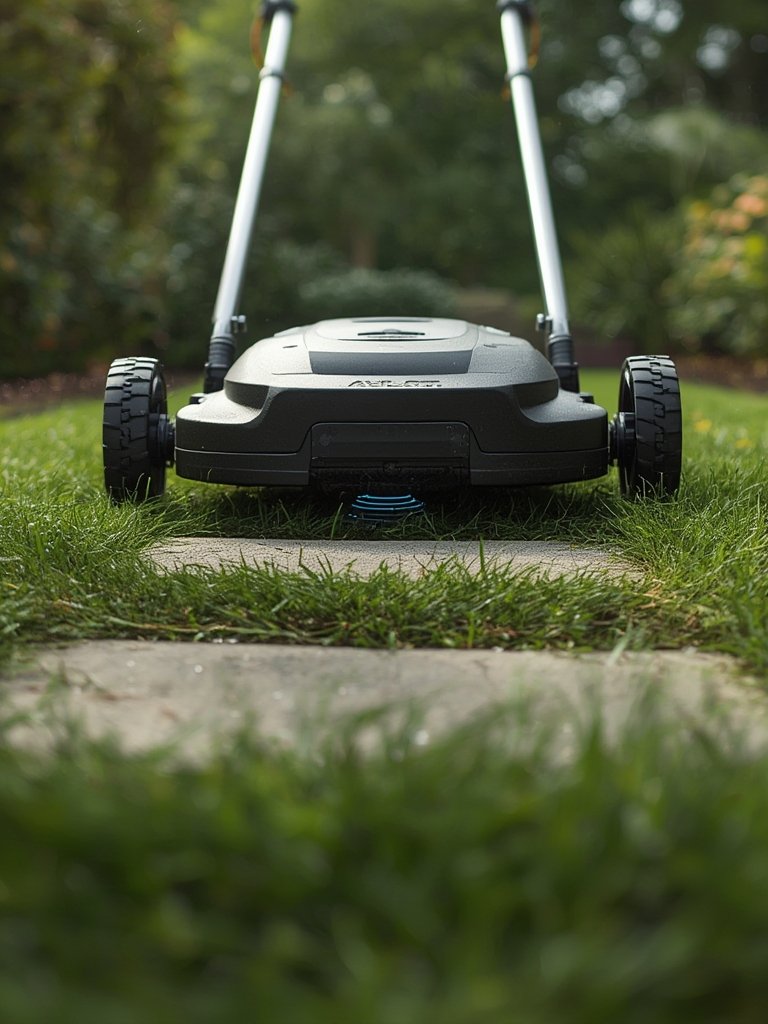
Some models pair well with other yard power tools. For instance, pairing a robotic mower with a mini chainsaw for tree pruning or supplementing with quality garden clippers can streamline all routine landscape tasks.
Advanced analysis & common pitfalls
Robotic mowers are evolving fast, but there are several pitfalls and blind spots you need to know before buying or upgrading—especially for high-end wireless models in 2025.
Known issues and overlooked problems
- Sparse user complaint data for wireless models: There is little published feedback regarding navigation or reliability problems on entirely wireless, no-boundary-wire mowers—a sign of either reliability or insufficient market penetration and testing. This means you may be among the early adopters, so manage your expectations on maturity.
- Batteries and large areas: Medium-size property owners (501–2,000 m²) are best served by current offerings, but if you have a very large or irregular space, even RTK models may need multiple recharges or manual repositioning. This is consistent with stats from market research.
- Potential hidden costs: Manufacturers report lower maintenance, but there is a lack of detailed breakdowns for 2025 subscription fees, installation, or servicing. Always review fine print for any recurring charges, especially for premium software navigation features or app connectivity.
- Navigation failure modes: No published comparative test results between RTK and boundary-wire systems exist, but it is known that thick tree cover, deep garden beds, or multiple small lawn sections can disrupt GPS-based and even camera-based navigation, leading to missed spots or mowers getting “lost”.
Advanced technical comparison: boundary wire vs. RTK/AI navigation
| Feature | Boundary Wire | RTK/AI Wireless |
|---|---|---|
| Setup time | High (wire install + calibration) | Medium (initial mapping only) |
| Navigation reliability | Well-proven; rare boundary failure | Dependent on satellite/camera, may struggle with complex shapes |
| Terrain adaptability | Works best on simple, flat lawns | Handles more complex layouts, but tree cover can cause issues |
| Price | $$ (Lower upfront) | $$$ (Higher upfront, unclear ongoing fees) |
| Operational cost | Low (routine blade replacement) | Low-medium (app updates, possible subscriptions) |
Besides the robotic mower, consider pairing your investment with practical garden maintenance upgrades. For example, a gardening tool set can help with seasonal lawn care or quick adjustments to garden beds that the robot can’t access.

Conclusion
The robotic lawn mower market is growing fast, but buyers should approach with realistic expectations—especially for the latest wireless and AI-powered models in 2025. The biggest strides are in medium-size residential lawns, but upfront costs are still high and true reliability in complex yards or challenging terrains is not fully proven. Whether you go for a classic boundary-wire setup or a wireless RTK unit, spend time on lawn assessment and research to avoid mishaps. Ready to reclaim your weekends, reduce the drudgery, and see a stronger lawn? Explore which robotic lawn mower fits your yard and future plans best—don’t forget to invest in some solid garden watering equipment or ergonomic weed pullers to upgrade your outdoor toolkit at the same time!
FAQ
How much does a robotic lawn mower cost in 2025?
Exact prices vary by brand and technology. Wireless RTK and AI-based mowers are typically more expensive upfront than boundary wire units. While long-term maintenance costs are lower, factor in possible service, installation, or software fees as these can impact total cost of ownership.
Can a robotic lawn mower handle complex lawn shapes or slopes?
Modern mowers using AI or RTK navigation can handle moderate complexity, but performance will decline in areas with dense trees, deep beds, or steep slopes. Double-check the model’s slope rating and expected reliability before purchasing.
Do I need to install a boundary wire for every robotic mower?
No. While most models on the market still use a boundary wire, the latest wireless and RTK GPS mowers skip this step, though they require proper mapping and may be more sensitive to satellite coverage and obstacles.
Can I use a robotic mower along with other gardening tools?
Yes. Robotic mowers are highly compatible with other garden equipment. Consider supporting your automated mower with pruning, watering, and weed-removal tools for comprehensive yard care.
How do robotic mowers handle pets or children playing in the yard?
Most models include safety sensors to stop blades if a pet or child approaches. Always check specific safety features and consult user reviews for peace of mind.