


Outdoor living kitchen projects are exploding in popularity, transforming ordinary backyards into high-impact entertainment zones. Whether you want to boost your home’s value or create unforgettable experiences, investing in an outdoor living kitchen is one of the most powerful upgrades available today.
Key Takeaways
- The outdoor living kitchen market reached $24.45 billion in 2024, with ROI potential up to 200% in warm climates.
- Smart tech, modular cabinets, and durable materials are transforming outdoor kitchens for year-round use.
- Complex installation and costs are common pain points—pre-planning is essential for success.
- What is an outdoor living kitchen and why build one?
- How to build your outdoor living kitchen: Step-by-step
- Advanced analysis and common pitfalls
- Conclusion
- FAQs
What is an outdoor living kitchen and why build one?
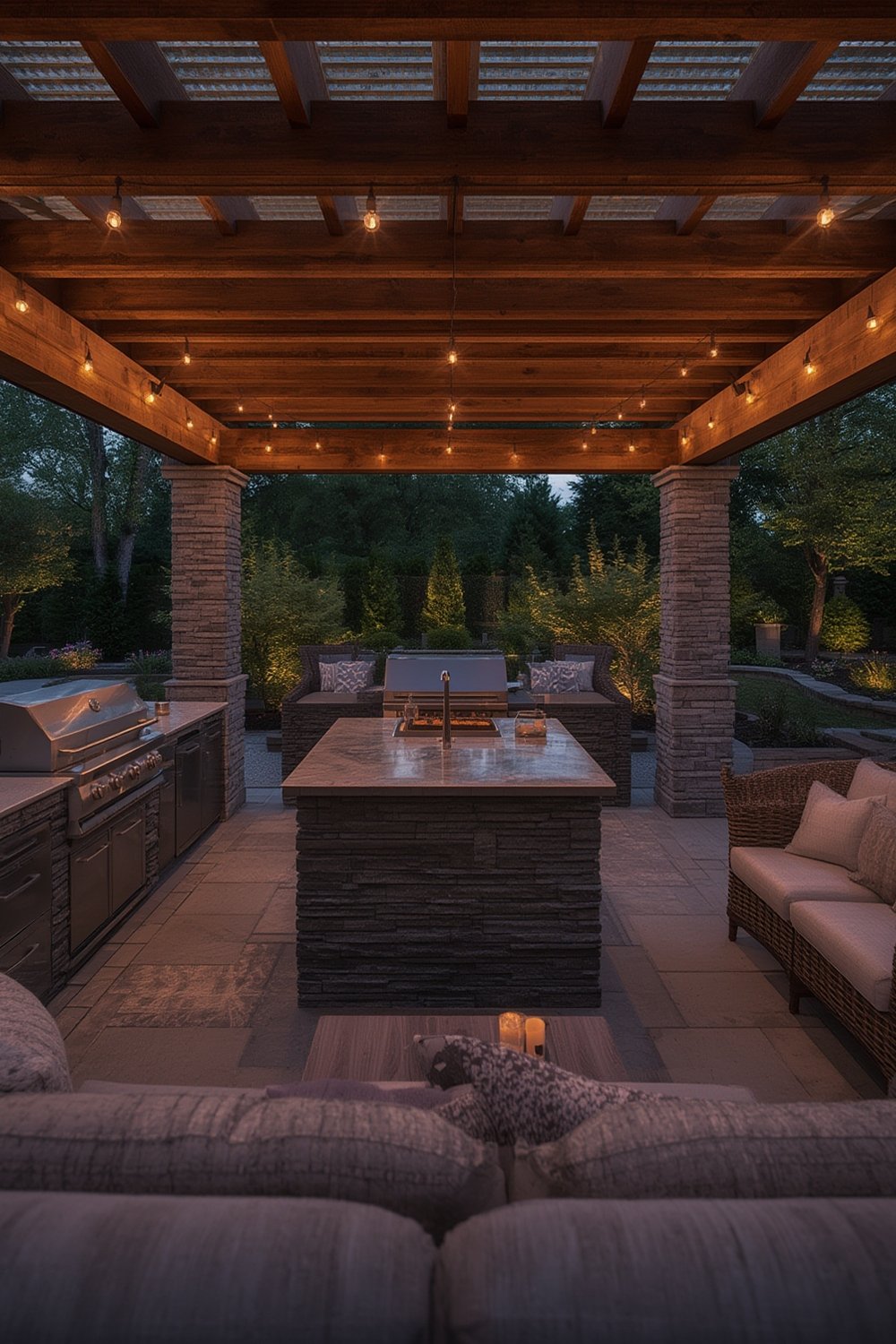
An outdoor living kitchen is a fully-equipped cooking zone built into your backyard or patio, merging traditional food prep with open-air relaxation and entertainment. These spaces typically go beyond simple grills, often including refrigerators, sinks, prep counters, and even smart-integrated lighting or heating. In 2024 alone, the global outdoor kitchen market jumped to $24.45 billion (source), with the U.S. leading in adoption and overall spending.
The demand for outdoor living kitchens is driven by:
- Rising homeowner focus on backyard entertaining instead of travel (source).
- Excellent ROI potential: most homeowners recover 60-80% of their costs immediately. Exceptional spaces in warm regions can see ROI up to 200% (source).
- Solid resale value: a $30,000 investment can yield a home value increase between $18,000 and $60,000.
If you want to become the envy of your neighborhood, turn overlooked patio real estate into a high-ROI asset, and enjoy more time outdoors year-round, an outdoor living kitchen is a practical, future-proof upgrade.
How to build your outdoor living kitchen: Step-by-step
Tackling an outdoor living kitchen can feel daunting, but breaking it down helps you plan for high impact, maximum value, and efficient installation. Here’s a roadmap covering everything from brainstorming to final assembly.
1. Define your budget and ROI goals
- Be realistic about what you can spend. Basic kitchens start at $10,000, luxury builds go above $50,000, and the median high-quality project runs around $30,000.
- Check local home sale comps for outdoor kitchen premiums. In warm markets with high outdoor living culture, value gains can justify higher budgets.
- Prioritize features with the best return (permanent grills, plumbed sinks, built-in lighting) and skip ultra-niche appliances unless you plan to use them weekly.
2. Choose the right spot and orient for usability
- Place the kitchen conveniently close to your indoor kitchen (easy supply runs) but with clear separation for safety and ventilation.
- Check for shade, level ground, and proximity to gas/electric lines.
- Use permeable pavers (permeable paver patio) for the floor to prevent drainage issues and keep maintenance low.
3. Select materials and decide on prefab, modular, or custom builds
- Stainless steel, concrete, and polymer/composite offer top durability and weather resistance (source).
- Premium woods (mahogany, cherry) add warmth but require regular sealing.
- Consider modular or preconfigured systems to reduce labor costs and installation complexity. Select surfaces that are heat- and weather-resistant for longevity.
4. Plan for functionality-don’t forget the accessories
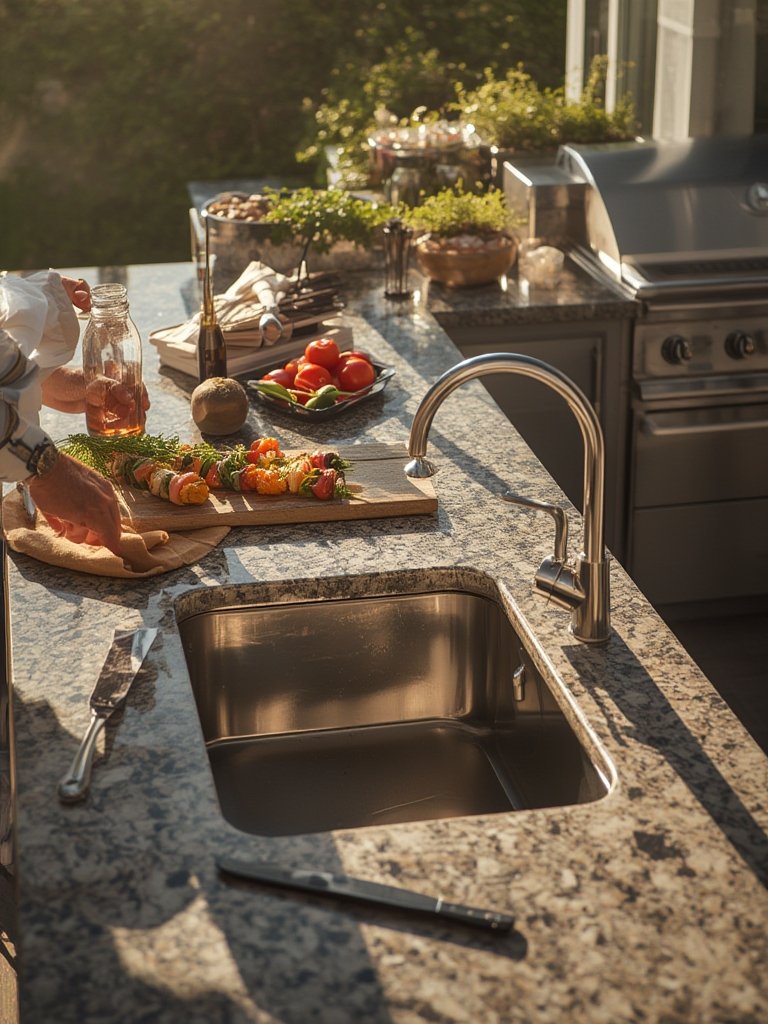
- Explore built-in barbecues, side burners, undercounter refrigerators (the fastest growing segment in 2024), and smart controls.
- Use solar-powered pathway lights or hardwired ambient lighting for safety and mood.
- Add weatherproof storage (outdoor deck box) to protect utensils, cushions, and supplies between uses.
5. Hire professionals when needed
- For anything involving gas lines, electrical work, or plumbing, bring in licensed pros. Improper installation can result in serious safety hazards and code violations.
- Factor in added costs for proper ventilation, especially if you’re adding smokers or wood-fired ovens.
6. Stage with outdoor furnishings and finishing touches
- Add weatherproof table covers (heavy duty cover review) and comfortable seating to make the space truly welcoming.
- Final touches like planters, integrated speakers, and ambient heating can keep the area comfortable deep into fall.
Advanced analysis and common pitfalls
Outdoor living kitchens offer powerful upsides, but there are real obstacles and overrated “extras” that can trip up even savvy homeowners. Understanding these up front can save you thousands and months of regret.
Common pitfalls and frustrations
- Installation complexity: Outdoor kitchens require weatherproof wiring, gas lines, and proper ventilation. Costs can balloon if you uncover surprises during install.
- Hidden costs: Delivery, grading, paver installation, and upgrading electrical circuits often add unplanned expenses.
- Material mismatch: Using indoor kitchen materials outdoors (like MDF or standard drywall) leads to rapid decay and costly repairs.
- Poor ROI in some markets: Regions with short outdoor seasons or low outdoor culture may not recoup high-end investment costs.
- Cabinet expense: Outdoor kitchen cabinets are typically much more expensive than indoor variants because of their durability demands.
- Over-complicating with extras: Pizza ovens, teppanyaki grills, or built-in kegerators seem great on paper, but add complexity, maintenance, and can crowd smaller kitchens.
Key features and innovations to prioritize
| Feature | Why it matters | Advanced tip |
|---|---|---|
| Smart tech integration | Automates lighting, climate control, and monitors appliances for safety | Link to your home’s WiFi for remote monitoring and easy upgrades |
| Modular design | Faster install and easy customization as your needs evolve | Add new zones (pizza oven or smokers) without heavy demolition |
| Weather-resistant materials | Stainless steel, composites, and sealed wood extend lifespan | Seal joints and caulk often to prevent water intrusion |
| Integrated lighting | Improves safety and ambience for night use | Use dimmable or color-changing LEDs for flexible mood settings |
Climate and ROI
- In warm climates, ROI can reach 100-200%. Homeowners in Southern California, Texas, and Florida see higher returns than those in colder regions like Minnesota.
- Neighborhoods where outdoor living is the norm boost ROI further-always research local trends before setting your budget.
Conclusion
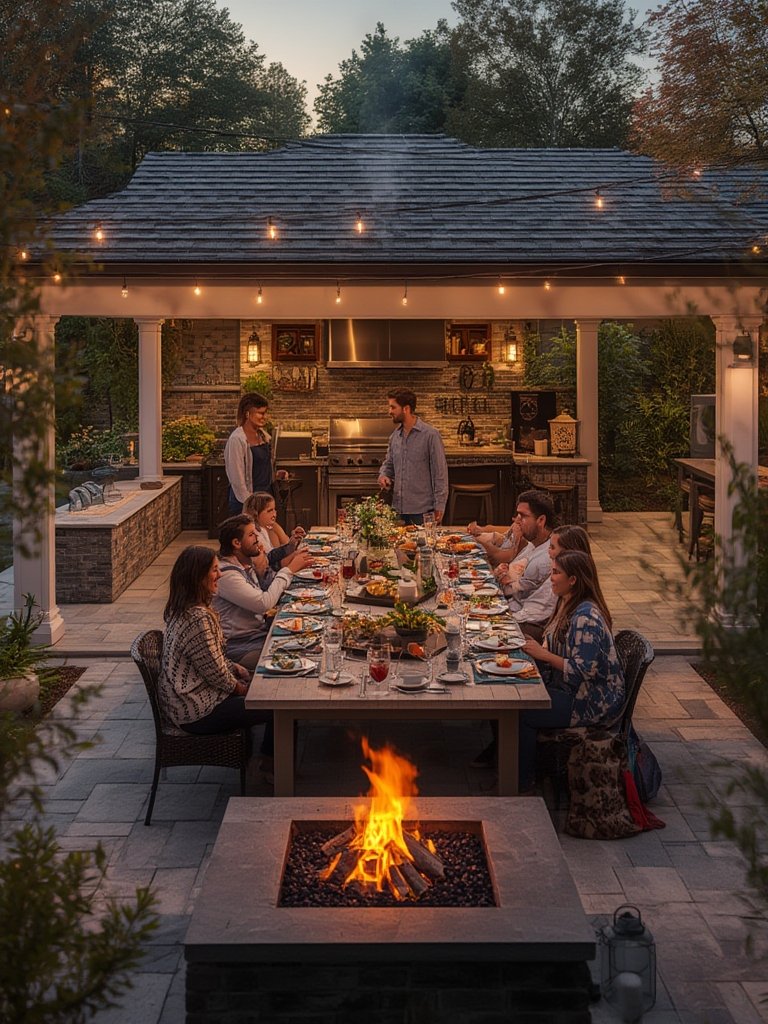
Outdoor living kitchens are more than a luxury-they’re a proven investment that increases home value, enhances lifestyle, and creates memories. From choosing weather-resistant materials and smart layouts to factoring in climate and installation challenges, doing your homework pays serious dividends. With modular systems available, smart technology booming, and strong support for DIY-friendly upgrades, almost any homeowner can unlock the benefits of an outdoor living kitchen this season.
Ready to take action? Begin your plans today and turn your backyard into a high-performing oasis. For more inspiration, see our full outdoor living kitchen ROI guide or explore our curated guides to permeable paver patios and solar lighting solutions.
FAQs
How much does an outdoor living kitchen cost in 2024?
Most projects range from $10,000 for a basic install to over $50,000 for a high-end custom build. Modular kits and DIY approaches can reduce costs, while professional, fully custom kitchens with luxury appliances can exceed $100,000.
What features provide the best resale value?
Permanent built-in grills, undercounter refrigerators, smart lighting, and plumbed sinks offer the best ROI. Extras like pizza ovens or kegerators are fun but might not boost resale as much unless outdoor kitchens are highly sought-after in your area.
Are outdoor kitchen cabinets really different from indoor cabinets?
Yes, outdoor cabinets use weather-resistant materials like stainless steel, concrete, polymers, or treated hardwoods. Indoor cabinets decay rapidly when exposed to sun and moisture. Pay extra for true outdoor-rated cabinetry for longevity.
How long does installation typically take?
Prefab modular kits can be installed in under one day if your site is ready. Custom mason-built kitchens may take 2-4 weeks, especially if you need new gas, electrical, or drainage work.
Will an outdoor living kitchen add value everywhere?
Outdoor kitchens add more value in regions with warm climates and a strong outdoor living culture. In colder zones or where outdoor entertaining is rare, ROI may be lower. Always research local trends first.