

English country kitchen design has become the center of attention for homeowners looking to merge the warmth of tradition with the drama of moody, dark cabinetry. The urge to ditch all-white spaces for something richer and more personal is rising fast-but there are practical decisions and cost realities you cannot ignore. If you’re seeking timeless character, resale appeal, or just a kitchen that feels both heritage-inspired and bold, this is your 2024 guide.
Key Takeaways
- Moody, dark cabinetry in the English country kitchen adds drama and timelessness, but needs careful balancing to avoid making spaces feel closed-in or high-maintenance.
- Bespoke features—like artisan hardware, Farrow & Ball paints, and vintage touches-raise costs significantly, especially in US markets importing UK elements.
- Most online guides skip practical issues: cleaning dark finishes, sourcing true vintage materials, and fusing modern appliances without ruining classic style.
- The Allure of the English Country Kitchen: 2024 Trends and Resale Value Insights
- Designing with Mood: Integrating Dark Cabinets into Cottage Kitchen Style
- Beyond Pinterest: Costs and Realities of a True English Country Kitchen Remodel (US & UK, 2024)
- Three Risks Top Articles Ignore: From Authentic Materials to Living with Dark Cabinetry
- Technical Pitfalls and Regrets: What Frustrates Homeowners Most
- Design Expert Advice and Real Kitchen Transformations
- Checklist—What to Ask, What to Demand, What to Avoid
- Conclusion
- FAQ
The allure of the English country kitchen: 2024 trends and resale value insights
The English country kitchen style is enjoying a genuine renaissance in 2024, as homeowners look for meaningful alternatives to minimalist and industrial trends. This movement is fueled by a quest for coziness, nostalgia, and layers of lived-in character-think vintage tiles, patterned wallpapers, tactile wood, and most notably, a new palette of moody, saturated hues for cabinets and trim. Olive greens, deep blues, and rich burgundy tones are surging in popularity to create warmth and a “heritage” feel without feeling dated.
Surveys from House Beautiful and Country Living both show that “cozy, heritage-inspired” designs with deep color and tactile, vintage textures are among the top kitchen remodeling requests of 2023-2024. While there’s no definitive data on resale value yet, the blend of moody cabinetry and country charm is seen as a timeless choice for older homes, and may positively impact perceived value, especially in character-focused neighborhoods.
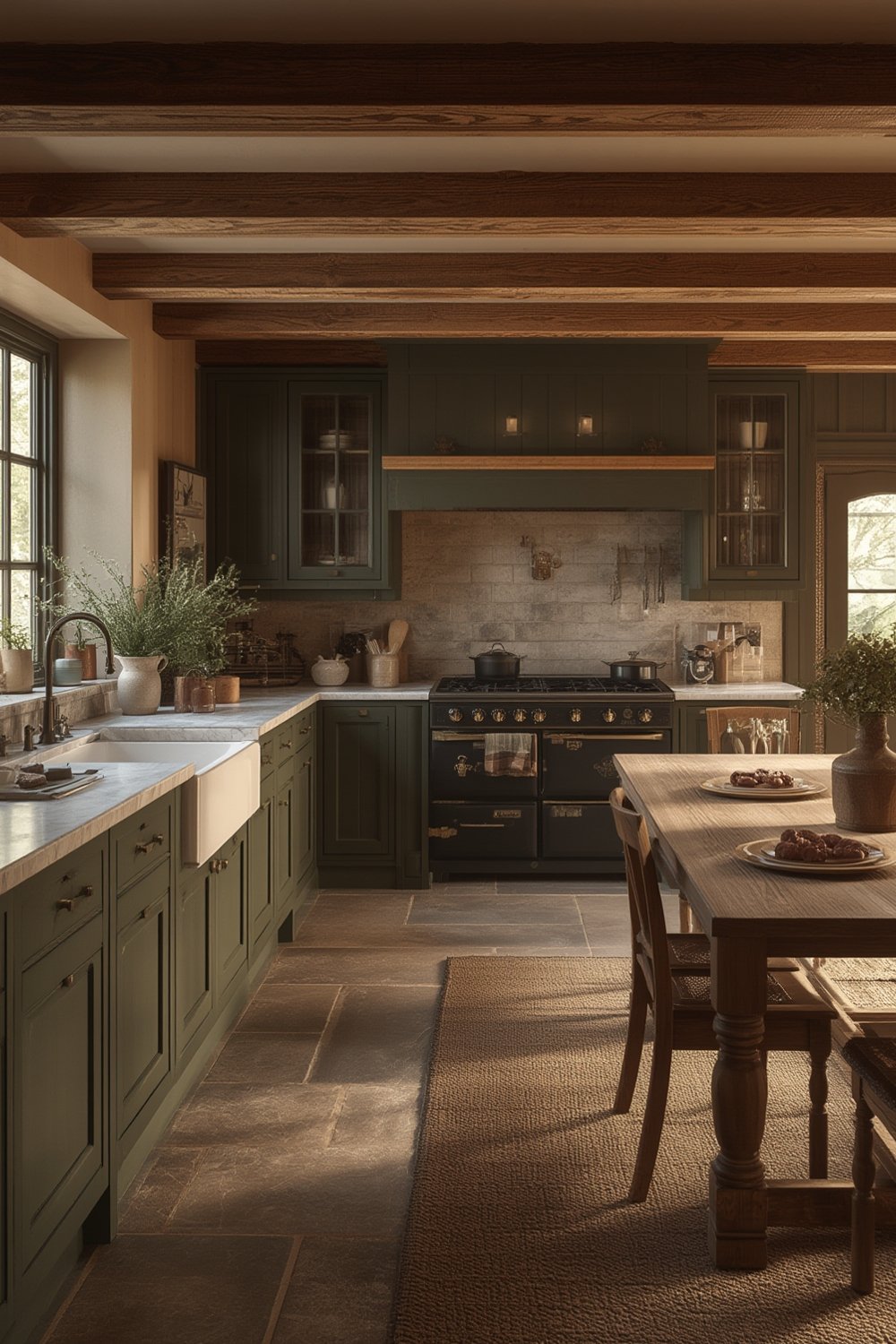
Designing with mood: integrating dark cabinets into cottage kitchen style
Adding moody kitchen design elements-especially dark kitchen cabinets-can be transformative but also risky. Pairing bold, deep colors with classic English cottage architecture brings a unique set of design and usability challenges. When done well, colors such as muddy olive, midnight blue, or deep burgundy create a dramatic yet inviting backdrop. Yet, in smaller kitchens or those with limited daylight, these hues can quickly make the space feel closed in or slightly oppressive.
Layering is crucial. As Homes & Gardens highlights, balancing dark cabinets with tactile fabrics, patterned wallpaper, and a blend of open shelves prevents heaviness. Consider reducing upper cabinets or adding glass-fronts to keep sightlines open.
Using natural and layered lighting further offsets the risk of a “cave-like” effect, while vintage-inspired, unlacquered brass hardware helps soften the look. Function should always come first-don’t sacrifice counter space or storage for visual effect. And if you’re worried about going too dark, sample the palette with a pantry or island before committing to all cabinetry.
- Pro Tip: Install dimmable under-cabinet LEDs to keep prep zones bright, no matter how dark your cabinets or countertops are.
- Hacks & Tricks: If you’re hesitant about fully committing to moody cabinets, use deep colors only on your island or lower cabinets—this grounds the space without overwhelming it.
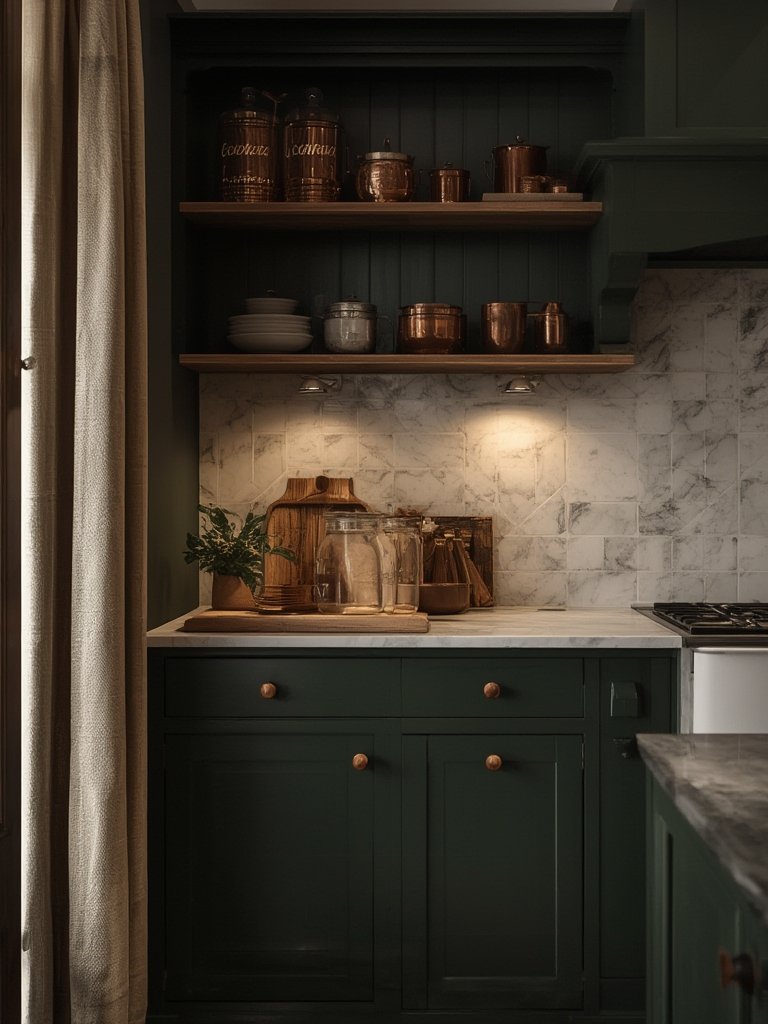
Remember, English country kitchen character doesn’t come from color alone. Lean into authentic, touchable textures: brick splashbacks, reclaimed wood shelving, cafe curtains, and vintage art instantly add charm and contrast to moody cabinetry. If you’re looking to maintain open sightlines and timeless appeal, avoid the temptation to “theme out” every design cue. Layer wisely, not excessively.
Beyond Pinterest: costs and realities of a true English country kitchen remodel (US & UK, 2024)
Reality check: achieving an authentic country kitchen styled with dark kitchen cabinets isn’t cheap. Bespoke features are central to the look, but they account for most of the cost escalation. In both the US and UK, the majority of cost drivers in a traditional kitchen remodel today are:
- Custom cabinetry: Deep green or blue painted Shaker cabinets are almost always made-to-order. Vendors such as deVOL in the UK represent the gold standard (and price premium).
- Specialty paints: Finishes like Farrow & Ball or Little Greene cost two to three times more than standard paint, and require careful application for durability.
- Stone or marble counters: Trending for English country kitchens, with Carrara or honed marble preferred-both require sealing and are more costly than quartz or laminate.
- vintage or reproduction hardware: Authentic unlacquered brass pulls, ceramic knobs, or custom latches can cost $20–$40 per piece.
- Sourcing & shipping: Non-UK homeowners face long waits and hefty shipping costs for true vintage or artisan-made fixtures.
No average price fits all projects, but detailed case studies from Homes & Gardens and Hello Lovely Studio put the expense for “full fat” English country kitchen remodels at a clear premium versus mainstream modern or white kitchens. Add-ons like concealed pantries, butler sinks, and Slabstone flooring increase costs further-especially if you’re trying to import deVOL or other UK brands to the US.
To reduce budget creep, consider alternatives: US-based artisan woodworkers, high-quality local hardware, or painted MDF doors with tough topcoats. For more value-boosting upgrades, see tips in our butler pantry kitchen resale guide.
Three risks top articles ignore: from authentic materials to living with dark cabinetry
Most trend pieces don’t address three real issues that can haunt an English country kitchen remodel:
- Sourcing authentic materials: If you crave genuine aged brass pulls, UK-made hardware, or unique marble, be prepared for shipping delays and import tariffs. Many “country” cabinets in US showrooms are only loosely inspired by heritage details, lacking true authenticity.
- Dark cabinetry maintenance: Deep colors reveal every fingerprint, water splash, oil spatter, and dust mote. High-traffic homes and open layouts can make these markings constant upkeep tasks. Not all deep paint colors are equal-custom mixes may chip and fade faster, especially if the wrong primer is used.
- Modern appliances integration: Heritage kitchens typically keep fridges and dishwashers out of sight using custom panels. Getting this right calls for extra coordination-especially when using non-standard European hardware or appliances. Mismatches stand out more when the backdrop is moody and dramatic.
For daily cleanup, products like the Winisok silicone under sink mat can help protect vintage cabinets and ensure your investment withstands splashes and spills.
| Neglected Risk | Real-World Problem | Quick Solution |
|---|---|---|
| Authentic hardware delays | Weeks-long shipping, non-matching replacements | Source from US-based vintage resellers; verify measurements |
| Visible grime on dark cabinets | Streaks, fingerprints, water spots | Specify satin finish with hardener; keep microfiber cloths on hand |
| Awkward appliance panels | Misaligned cabinet faces, lost resale value | Hire a cabinetmaker with appliance panel experience |
Technical pitfalls and regrets: what frustrates homeowners most
The most recurring complaints after a moody English country kitchen remodel? It boils down to lighting, cleaning, and aesthetic misjudgments:
- Lighting missteps: Insufficient layered lighting makes dark cabinetry oppressive, especially on short winter days. Natural light alone is rarely enough-plan for under-cabinet, wall sconce, and even ceiling cove lights.
- Finishing and cleaning: Fingerprints, smudges, and stains jump out on matte black, navy, or olive doors. Poorly cured paints chip, and saturated colors fade if exposed to heat and sun without protection. High-use drawers often look tired fast without periodic touchups.
- Lack of material contrast: Replacing all cabinetry with a single moody shade creates flatness. Without rustic wood open shelving, stone, or aged metal, the look can feel oddly cold or incomplete.
- Visual clutter: Overusing patterns-bold wallpaper, colored cabinets, and heavy vintage decor in one space-can result in a chaotic, overcrowded appearance instead of the relaxed charm the style promises.
Frequent frustration also stems from functional issues. For example, if you add a farmhouse table but neglect to measure chair pull-out zones, daily use becomes an obstacle course. Think function first: maximize clearances and ensure deep drawers are practical, not just pretty.
For step stools or cleaning tasks, consider practical products like the HBTower step ladder-especially if you install ceiling-height cabinets popular in English kitchens.
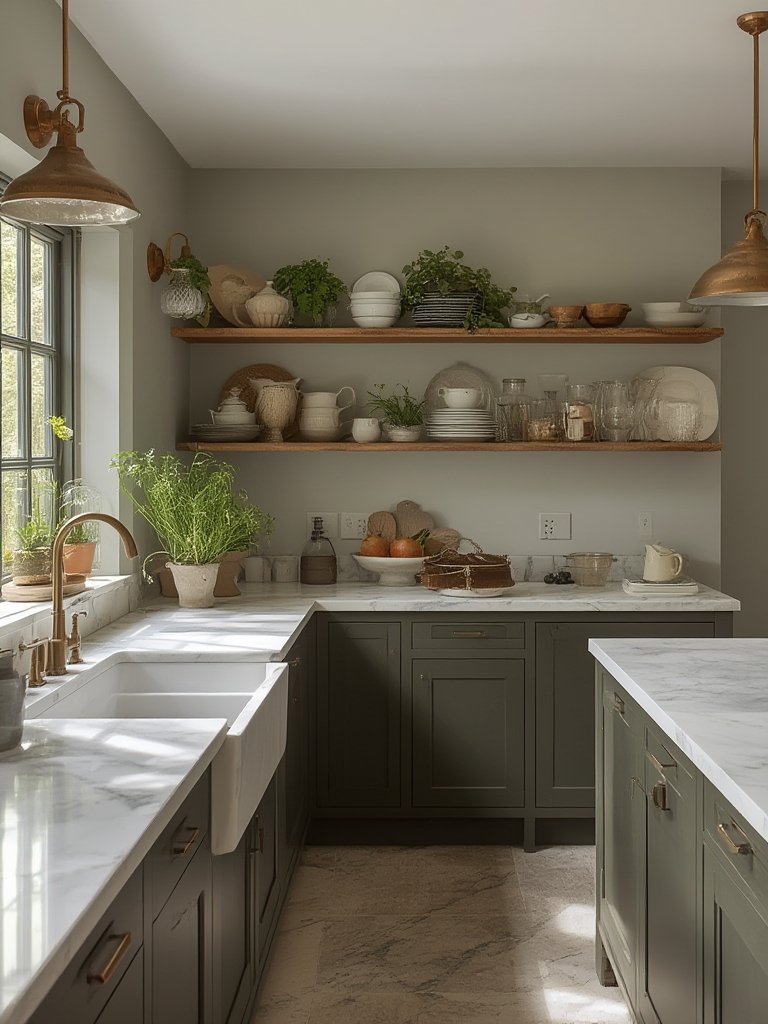
Design expert advice and real kitchen transformations
Certified designers such as Maria Killam and the deVOL Kitchens team offer practical, expert-backed strategies for anyone taking on a moody English country kitchen project. Common themes in successful remodels include:
- Using olive green or heritage blue cabinets, paired with warm unlacquered brass or bronze pulls
- Contrasting classic shapes (e.g., Shaker panels) with tactile stone, slatted wood, or honed marble
- Introducing layered lighting, open shelving in select areas, and elements like cafe curtains for softness
- Prioritizing durable paint finishes and specifying extra protective coatings on high-use drawers
- Blending concealed, panel-ready appliances to preserve period authenticity
For compelling before/after case studies, see deVOL’s London townhouse kitchen or Maria Killam’s signature method on building heritage color palettes.
Want more inspiration or to explore storage upgrades that boost both function and value? Visit our best lid organizer solutions for kitchens for a cleaner, more efficient workspace.
Checklist—what to ask, what to demand, what to avoid
- Ask for cabinetmaker’s references and see their portfolio of previous English country kitchen work.
- Demand a detailed sample board including proposed cabinet paint (with topcoat), stone, tile, and hardware before signing off.
- Check lighting layouts-require at least three light layers (task, ambient, accent).
- Ensure all cabinetry warranties cover paint adhesion and hardware finish durability.
- Ask suppliers to verify material sourcing, especially if using “vintage” components or UK-imported details (confirm lead times and authenticity certificates).
- Avoid heavy upper cabinets on multiple walls-use glazed cabinets or open shelving to keep light flowing.
- For moody kitchen design, always test large paint swatches on-site and view throughout the day.
- Do not overload the visual palette: pick either bold wallpaper or bold cabinetry, not both.
For additional space optimization ideas, our ultimate underbed storage guide brings clutter-free concepts beyond the kitchen.
Conclusion
Blending a moody palette with authentic English country kitchen design can yield stunning results-but it’s not a shortcut to style or value. The choices are highly personal, costs are real, and overlooked technical details can make or break the outcome. By focusing on authentic textures, durable finishes, and expert planning, you can create a kitchen that’s as timeless as it is bold. Whether remodeling for joy or resale, let the English country kitchen guide not just your color selection, but every practical detail. If you’re ready for a deeper dive or want experienced support with your project, start by saving this checklist and booking a design consultation today.
FAQ
What paint finish works best for dark kitchen cabinets in an English country kitchen?
Satin or semi-gloss finishes are best for durability and easy cleaning. Ensure your painter uses a hardener or extra topcoat, as matte finishes tend to show fingerprints and may chip faster in high-traffic kitchens.
How do I prevent my kitchen from feeling too dark or closed in?
Limit the use of dark shades to base cabinets or an island, pair with plenty of layered lighting, and balance with open shelves, glass doors, or lighter countertops and backsplashes.
Are genuine vintage materials worth the extra cost and wait time?
If authenticity is your top priority and you’re willing to wait, true vintage hardware and surfaces elevate the space. For most, US-based reproduction hardware and high-quality new stone are enough to achieve the look without import delays and high shipping fees.
How should I plan appliance integration in a country kitchen remodel?
Invest in panel-ready appliances (fridge, dishwasher) so they can be concealed behind custom cabinet faces. Coordinate with your cabinetmaker early to ensure door and handle alignment matches the surrounding cabinetry.
What are common cleaning complaints with dark cabinets?
Dark cabinets show dust, fingerprints, and water spots more readily than lighter finishes. Regular wiping with a microfiber cloth helps, and a satin finish is easier to maintain than matte. Plan for quick spot cleaning as part of your weekly routine.