


Bathroom accent wall upgrades have become a standout trend in 2024 bathroom renovations, capturing the imaginations of DIY homeowners looking for a bold transformation that truly defines their space. Whether you’re after drama, texture, or a fresh pop of color, getting your accent wall right means more than just following a fad—there are real choices, pitfalls, and must-know tips that can make or break your remodel.
Key Takeaways
- The best bathroom accent wall blends trending materials and colors with your unique taste while factoring in durability and maintenance.
- Preparation and moisture management are critical to prevent costly regrets, especially with wallpaper and textured treatments.
- Costs vary widely; savvy homeowners get material samples, confirm moisture ratings, and future-proof their design ahead of installation.
- Why add a bathroom accent wall in 2024?
- Most popular materials & looks for bathroom accent walls
- Trending statement tile bathroom styles and design ideas
- Bold bathroom wallpaper and textured wall treatments: Pros, cons, and 2024 options
- What does it cost? Material & installation price ranges for 2024
- Durability and moisture resistance: What matters for bathroom accent walls
- Pro tips and common regrets—what competitors aren’t telling you
- Codes, recommendations, and avoiding moisture mishaps in 2024
- FAQs
Why add a bathroom accent wall in 2024?
Creating a bathroom accent wall is one of the fastest ways to add sophistication, personality, and value to your home in 2024. This year, accent walls are about more than just color—they’re about making a purposeful, lasting impression. With 37% of homeowners remodeling their bathrooms in 2023—24 modifying nonshower walls (2024 U.S. Houzz Bathroom Trends Study), it’s clear that adding a visual focal point is top-of-mind. Homeowners are motivated not just by aesthetics, but also by a desire to boost resale value and personalize spaces without a whole-gut remodel. Thanks to new moisture-resistant materials, even small bathrooms can benefit from a bold accent feature that stands up to daily use.
Most popular materials & looks for bathroom accent walls
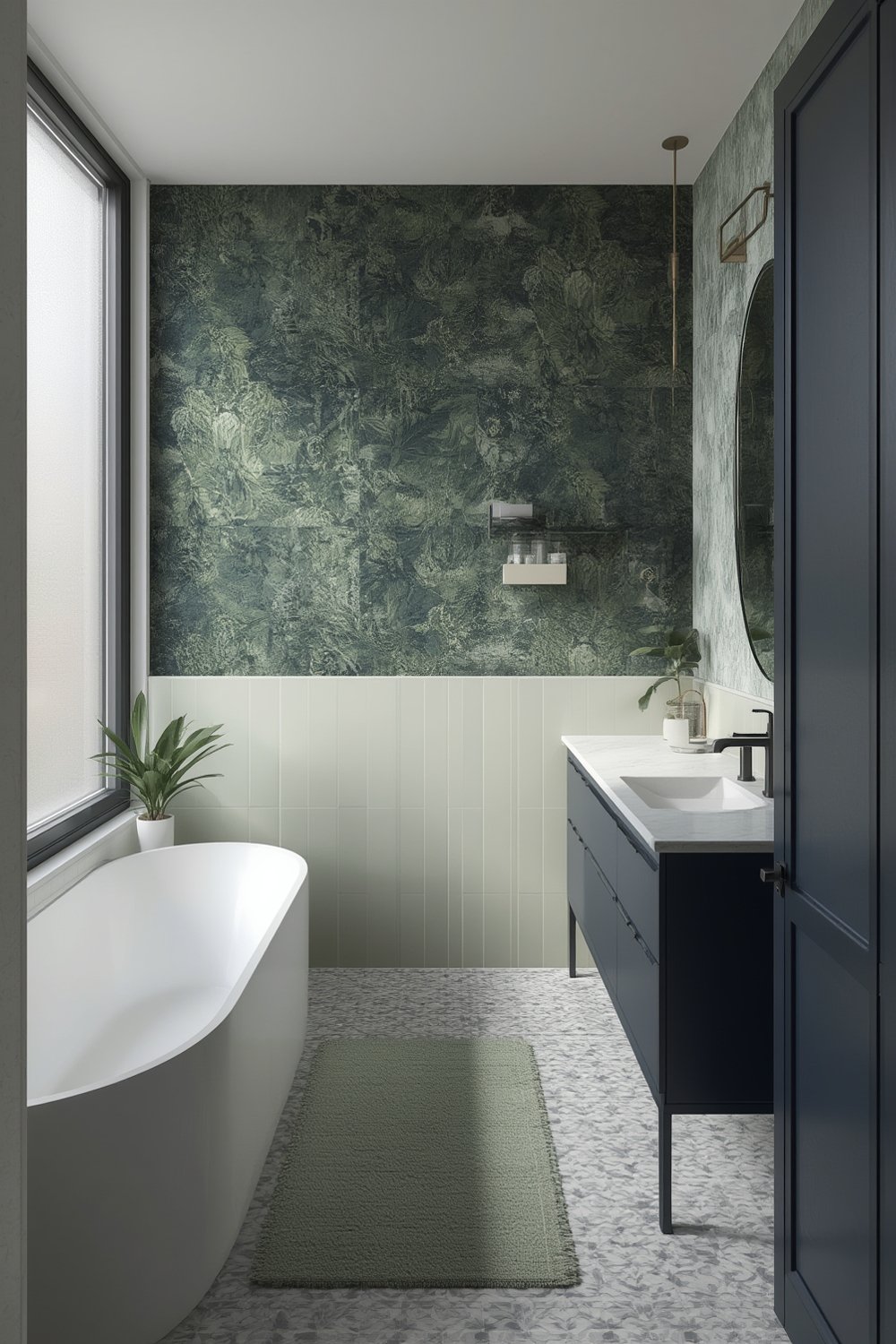
The top 2024 looks for a bathroom accent wall blend cutting-edge style with practical durability. While there’s no exhaustive list of favorite materials, tile, wallpaper, and textured panels remain the go-to options for most renovators. In terms of color trends, white leads at 22%, followed by blue at 17% and green at 11% for accent walls (among those updating or installing them; source). Homeowners are seeking shades that evoke calm, spa—like vibes, or dramatic high-contrast effects depending on their goals. The statement tile bathroom is especially popular, where geometric or repeating patterns steal the show—think chevrons, herringbone, or even art deco mosaics.
For the materials themselves:
- Tile: Still king for wet zones, classic subway patterns and large-format shapes join new bold color palettes for the accent wall treatment.
- Wallpaper: Bolder, more moisture-resistant than ever; especially on “dry” nonshower walls.
- Textured panels: Fluted, reeded, or faux-stone wall treatments are surging as they deliver both dimension and easy cleaning.
Explore more about spa-feel upgrades and color schemes in our guide on spa bathroom features.
Trending statement tile bathroom styles and design ideas
The statement tile bathroom in 2024 means pushing past neutrals into energetic patterns and inviting textures. According to current research, natural stone looks such as travertine (6.5% of remodels), Tuscany earth tones, and silver-white marble (4.8%) are on the rise in bathrooms (ImproveItUSA, 2024 trends). However, ceramic tiles (44%) and porcelain (36%) remain dominant for their affordable mix of style and resilience (Houzz).
- Patterned bathroom tile: Consider bold designs like arabesque, terrazzo, or even metallic finishes if you want an instant focal point.
- Mix and match: Use two tile styles for depth—vertical subway with marble, for example.
- Natural dimension: 3D tile or stone adds tactile appeal and catches light in small spaces.
Not sure where to start? Request samples of your top 2 picks and tape them to your accent wall spot to experience them at different times of day. This low-commitment strategy helps prevent post-installation regret—something rarely discussed in the average design blog.
Learn more about maximizing space and layout for your upgraded wall in our wet room bathroom guide.
Bold bathroom wallpaper and textured wall treatments: Pros, cons, and 2024 options
Wallpaper and textured panels make a bold statement but come with unique pros and cons in bathroom settings. The latest bold bathroom wallpaper uses improved adhesives and moisture barriers so you can achieve lush florals, geometric patterns, or even faux tile looks on the dry walls—yet installation must be meticulous. For those after maximum visual punch, grasscloth or flocked papers can create an ultra-luxe vibe but may suffer in high humidity. Textured bathroom wall options—from fluted MDF panels to stone veneer—offer tactile interest and can help hide older wall imperfections, but not all are rated for damp spaces.
- Advantages: Max color/pattern with modest effort, can cover uneven walls, and offer semi–DIY installation potential.
- Drawbacks: Watch for seams, peeling, and mildew—especially if your bathroom lacks a vent or the material isn’t bathroom-rated.
- Best for: Dry “feature” walls, powder rooms, or any area far from direct steam and splash zones.
When matching wall treatments with fixtures, floating vanities can showcase an accent wall beautifully—explore some clever storage combos in our floating vanity bathroom guide.
What does it cost? Material & installation price ranges for 2024
Most homeowners want to know: what’s the real cost of creating a bathroom accent wall? While no current source offers a dollar-for-dollar breakdown on just the accent wall, overall bathroom remodel median spends rose to $15,000 for major projects and $8,500 for minor updates in 2023 (2024 U.S. Houzz Bathroom Trends Study).
- Patterned bathroom tile: $10—$50 per square foot including installation is a reasonable 2024 estimate for quality materials; costs scale rapidly for premium stone or imported tiles.
- Bold bathroom wallpaper: $2—$12 per square foot for material, with $1—$8 per square foot for professional installation. peel-and-stick wallpaper and DIY options can be cheaper but often fall short in moisture-prone rooms.
- Textured wall panels: $6—$28 per square foot for fluted/composite materials; genuine stone veneer climbs beyond $40 per square foot.
Pro tip: Always budget 20% extra for contingencies and order more material than your wall’s dimensions call for to cover miscuts and last-minute changes.
If your project coincides with a comprehensive bathroom update, explore smart financing ideas in our home equity line credit remodel strategies.
Durability and moisture resistance: What matters for bathroom accent walls
Moisture and durability are the make-or-break factors for any bathroom accent wall. Sadly, data on exact longevity or maintenance for specific materials in 2024 is scant. Practical experience and adjacent research, however, show that tile leads for durability and waterproofing when properly installed. Wallpaper must be labeled as bathroom/moisture-resistant—and even then, can struggle with peeling or mold if ventilation is poor. Textured panels offer easy cleaning if they’re composite or PVC based, but unsealed wood or MDF will warp in steamy conditions.
| Material | Moisture Resistance | Maintenance | Durability | Best Uses |
|---|---|---|---|---|
| Statement Tile | Excellent | Low (grout needs sealing) | High | Shower & Wet Walls |
| Bold Wallpaper (bath-rated) | Moderate | Medium (watch for seams) | Medium | Dry Feature Walls |
| Textured Wall Panels (PVC/Composite) | Good | Low | Medium—High | Dry/Wet Zones—check rating |
Don’t skip on prepping: humidity-sensitive choices make it essential to fix leaks, use mold-resistant drywall, and always install a powerful bathroom exhaust fan. This is reflected in larger trends: nonslip (31%), heated (25%), and mildew-resistant (13%) floor choices show how much climate matters to modern bathroom material selection (source).
Pro tips and common regrets—what competitors aren’t telling you
Most bathroom accent wall guides gloss over the real-world frustrations and missed steps that can lead to regret:
- Wall prep is critical: Skim-coat, prime, and smooth every inch—especially for wallpaper or thin panels. Skipping this nearly guarantees bubbles, seams, or tile lippage.
- Source and test samples: Not just for color, but to verify texture, cleaning ease, and light reflection. Live with them in your actual space for a few days.
- Future-proof design: Pick looks you’ll enjoy beyond next year’s trends, and be cautious with irreversible installations of “trendy” colors or niche motifs.
- Hidden challenges: DIY tile often leads to uneven joints and headaches with outlets or plumbing. Wallpaper can peel at seams or corners if bathrooms get stuffy.
- Post-installation regret: Some users discover cleaning is more tedious than expected (textured grooves trap dust, dark grout discolors). Most blogs don’t mention this.
By flagging these realities up front, you set yourself up for genuine satisfaction, instead of disappointment, a few months down the road.
Codes, recommendations, and avoiding moisture mishaps in 2024
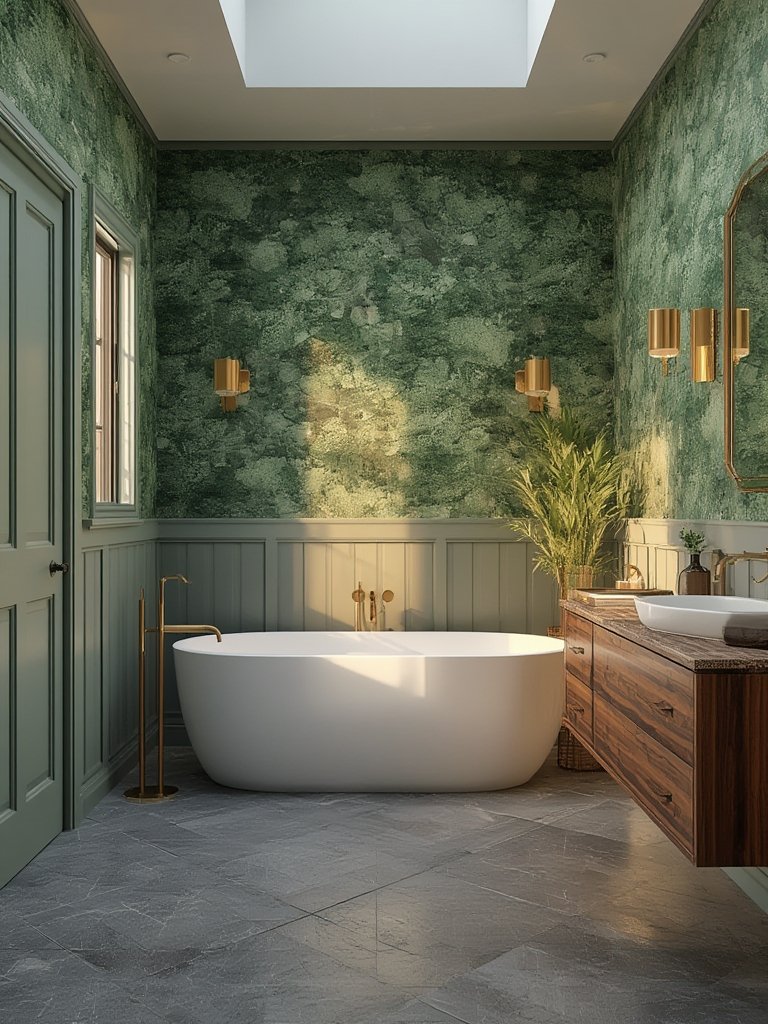
No nationwide building code restricts the use of bold bathroom wallpaper or textured wall panels in typical home bathrooms. However, practical recommendations are clear: always choose products specifically rated for damp spaces. Avoid unsealed or paper-backed wallpapers anywhere near a tub or shower, and remember—moisture damage usually isn’t covered by manufacturer warranties. Local building departments may require mold-resistant drywall (“green board”) for any bathroom wall upgrades.
Key steps to avoid disaster:
- Ventilate—run a powerful bath fan during and after showers
- Seal all grout, caulking, and material seams
- Use mold/blocking primers before panel or wallpaper installation
- Ask retailers for technical sheets and installation specifics for your climate
More tips on safe, smart upgrades for damp rooms are available in our article on wet room bathrooms.
FAQs
What is the best material for a bathroom accent wall to prevent moisture issues?
Porcelain or ceramic tile is the most moisture-resistant and durable material, especially in wet zones or where daily splashes are expected. For dry areas, bathroom-rated wallpaper or composite wall panels work well but always check the manufacturer’s specs for humidity resistance.
Can I install a bathroom accent wall myself?
Yes, many accent wall upgrades are DIY-friendly. Peel-and-stick wallpaper or ready-to-mount panels are more forgiving than tile work. However, prepping your wall properly and following moisture management steps are critical to avoid later issues.
How do I know if wallpaper or paneling is safe for my bathroom?
Look for products labeled as bathroom or moisture-resistant. Ask for technical data sheets, and if in doubt, speak directly with the manufacturer. Always install these materials on “dry” walls away from direct water jets.
What design mistakes cause the most regret with new bathroom accent walls?
Common mistakes include not prepping the wall properly, choosing high-maintenance textures without considering cleaning, or picking a color or pattern that feels dated within a year. Testing samples first is crucial.