


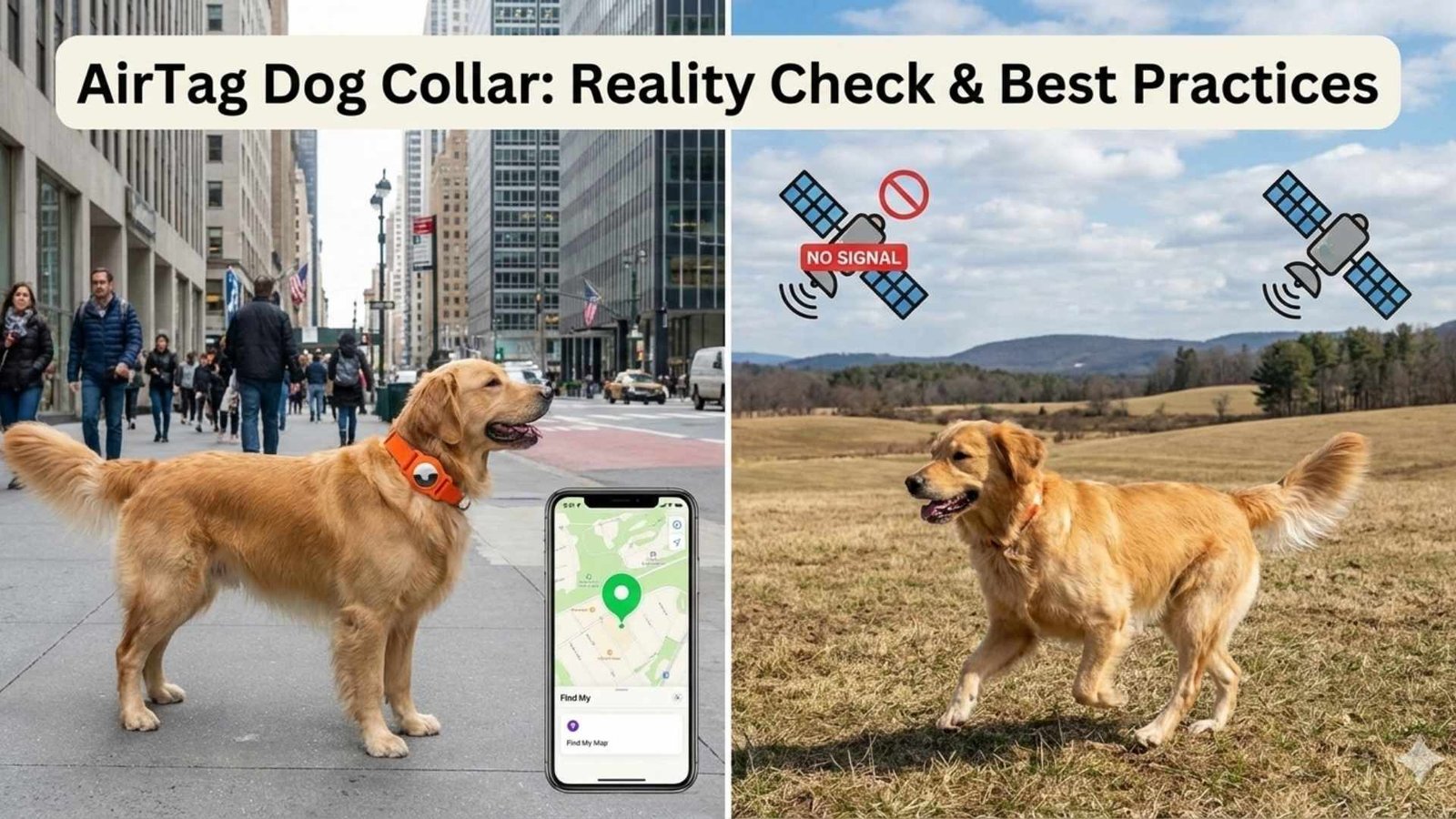
AirTag dog collar debates are heating up among pet owners trying to keep their dogs safe. With more tech options available in 2024, the big question is: Are AirTags good enough, or do you need a dedicated GPS dog tracker?
Key takeaways
- AirTag dog collars are affordable and convenient in cities but unreliable for real-time and rural dog tracking compared to GPS collars.
- No hard data proves AirTags recover more lost dogs; experts and user reports favor dedicated GPS trackers, especially outside dense urban areas.
- AirTags can give a false sense of security and have mounting, sound, and privacy downsides; read on for actionable, unbiased advice.
- What Makes an AirTag Dog Collar Different?
- How to Use an AirTag Dog Collar: Step-by-Step
- Advanced Analysis and Common Pitfalls
- Conclusion
- FAQ
What makes an airtag dog collar different?
AirTags are designed by Apple for finding lost personal items, not pets. Dog owners often attach an AirTag to a dog’s collar and connect it to their Apple device through the Find My app. The core difference? AirTag dog collars rely on Bluetooth and the Apple device network, not GPS or cellular signals, to track your dog’s location. This limits their effectiveness, especially in areas without high concentrations of nearby Apple users.

Unlike GPS dog trackers, which use specialized GPS chips and transmit live data over cellular networks, AirTags can’t provide continuous real-time tracking if your pet is out of Bluetooth range and no other iPhone users are close by. In cities, AirTags can update the location every few minutes when lots of people are around. On trails, farms, or remote areas, your dog’s tag may not update at all. That’s why, according to veterinary tech research, GPS trackers are considered the safer bet for most escape-prone dogs.
How to use an airTag dog collar: step-by-step
Before you grab any AirTag dog collar, it’s essential to follow some realistic and actionable steps for setting up and maximizing your dog’s tracking safety.
- Pro Tip: Always pair your AirTag with more than one Apple device in your household to ensure you never lose app access during a phone swap or battery drain.
- Hacks & Tricks: If you’re in a dense city, consider using a wearable with both an AirTag and a GPS tracker for double location coverage during crowded events or vacations. This gives you the benefits of Apple’s network and GPS simultaneously with little extra weight for your pet.
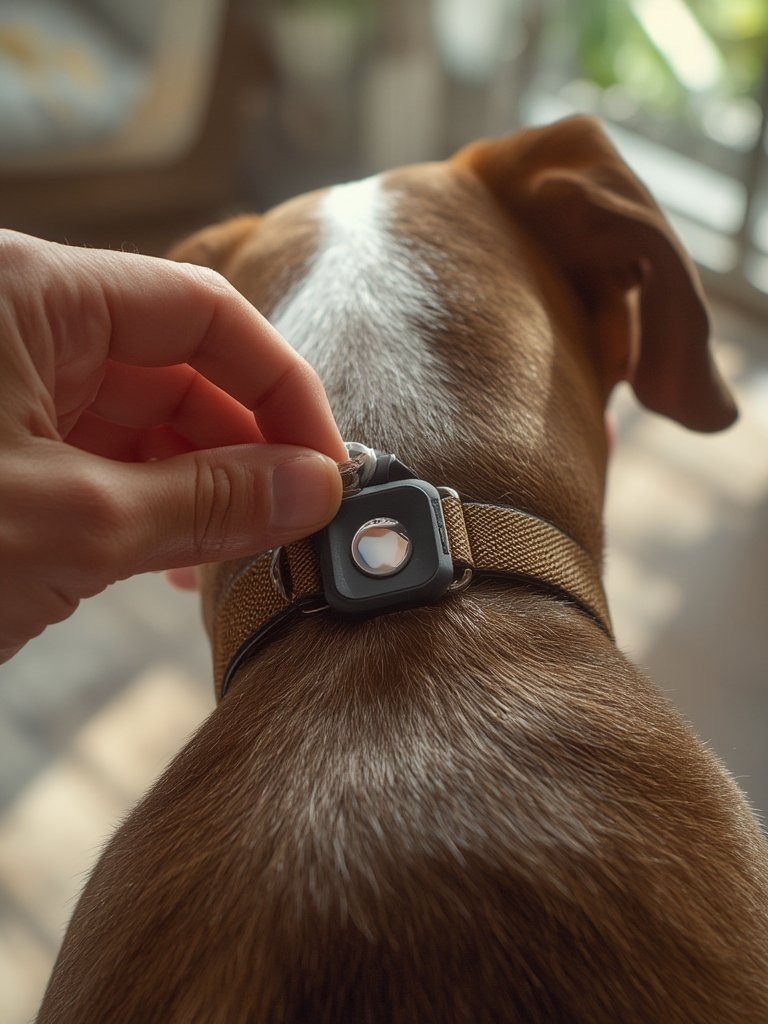
- Buy a reliable AirTag and a slip-proof collar holder. Apple does not make a pet-specific mount. Pick a third-party case with strong reviews for security and water resistance, especially if your dog swims or plays rough.
- Activate the AirTag in the Apple Find My app. Give it a custom name (e.g. “Bella’s Collar Tag”) and assign a unique emoji to make it easy to spot amid other tracked devices.
- Secure the AirTag snugly to your dog’s collar. Test the fit by tugging, bending, and twisting. The biggest owner complaint in 2024 product reviews is AirTags falling out of loose holders during vigorous play.
- Check battery status monthly. AirTag batteries usually last about 6–12 months. Replace with a quality CR2032 cell before you risk a downtime window.
- Understand your environment. Track test the AirTag collar around your block—note any dead zones or slow update areas. In rural or forested areas, test carefully; be aware that location updates might be hours apart if no Apple devices are close by.
- If your dog goes missing, open Find My, select the AirTag, and check its last location. In dense areas, you may be able to use Precision Finding for close-range, meter-level guidance.
- Consider a GPS tracker if you need live tracking or rural coverage. Evaluate models like Fi, Tractive, or Whistle, which use a mix of GPS, Wi-Fi, and cellular and provide real-time updates regardless of passerby Apple device density.
- For indoor tracking in multi-level buildings, Precision Finding works best with recent iPhones. If interference is common, test in advance and have a plan for “searching” delays.
- Every walk, check the AirTag is still attached-many users have lost tags during playtime or rough hikes.
- Combine pet tracking with good home safety basics. Doors, yards, or travel kennels with reliable containment (like a dog gate) matter just as much as any digital solution.
Advanced analysis and common pitfalls
User reviews and recent research highlight critical differences between AirTag dog collars and GPS dog trackers-especially when dogs go missing in challenging conditions.
| Feature | AirTag Dog Collar | GPS Dog Tracker/Smart Collar |
|---|---|---|
| Technology | Bluetooth + Apple Find My | GPS satellites + multiple cellular networks |
| Tracking Range | Near Apple devices only (no coverage in remote/rural areas) | Virtually nationwide/international (within cellular range) |
| Update Frequency | Minutes/hours (dependent on other Apple users nearby) | Real-time (every few seconds/minutes) |
| Subscription Fees | No | Yes, typically $60–$339/year |
| Durability/Waterproof | Depends on third-party holder (often a weak point) | High (designed for pet use) |
| Sound Alerts | Yes, periodic beeps can startle pets | No, unless owner-initiated |
| Privacy | Strong encryption, anonymized device relays, anti-stalking features | Cloud location data (may be kept long-term or shared; policies vary) |
| Best Use Case | Cities, indoors, as a backup for microchipped dogs | Roaming dogs, countryside, off-leash hikes, home-alone dogs |
- Common Pitfalls include: believing AirTags provide live tracking everywhere; using a poor-quality holder; ignoring beeping that could frighten your dog; and not testing device performance in your real home and walk environments.
- Watch for privacy concerns-GPS collars often store location history in vendor clouds, raising questions about who has access to your pet’s whereabouts (latest tech trends).
- For dogs with gum or breath issues, pair their increased tracking with dog dental powder-both are simple peace-of-mind upgrades.
- If your dog is a swimmer, double-check the water resistance of both the collar and tracker you choose.
Many guides gloss over that AirTags can beep due to anti-stalking features, which is disruptive for many pets. False sense of security is a major issue-many believe AirTags mean their dog will always be found, but this isn’t supported by evidence. For a deep dive on pet recovery data and gaps in the market, check the 2024 independent report.
For hair cleanup after outdoor adventures, don’t forget a pet hair remover tool-essential for active, shedding dogs tracked with any tech.
When privacy is a paramount concern or you want to limit cloud data, AirTags are generally better. However, always bear in mind the real-world gaps in coverage, as outlined in Apple’s own support forums.
Conclusion
The 2024 reality: AirTag dog collars are affordable, user-friendly, and work well in dense neighborhoods—but they are not a full substitute for GPS dog trackers if your main priority is reliable lost-pet recovery. If you choose to use airtag dog collar solutions, be realistic about their limitations, regularly check your mounting, and consider a hybrid approach when your dog’s safety is mission-critical. For complete peace of mind, invest in a true GPS tracker. Ready to try smarter pet tracking? Explore the best tech and containment with options like auto-close gates or add health support with top-rated dog probiotics.
Now is the time to test your dog’s setup—don’t wait for an emergency.
FAQ
Are AirTags safe for dogs to wear on their collar?
Yes, AirTags are generally safe if installed securely in a robust holder. But ensure the holder is chew-proof, fits snugly, and doesn’t dangle or irritate your dog’s neck. Supervise initially to check for discomfort.
Can an AirTag track my dog anywhere?
No, AirTags only update location when near an Apple device with internet. In remote or rural areas without iPhones nearby, you may not get location updates at all. For nationwide or off-leash tracking, GPS trackers are more reliable.
Does the AirTag battery last as long as a GPS tracker’s?
AirTag CR2032 coin cell batteries last around 6–12 months. GPS trackers often need charging every week or every few days because they use cellular and GPS chips, which drain more power.
Will my dog’s AirTag beep, and can I stop it?
AirTags can beep periodically as an anti-stalking measure, especially if separated from your phone for an extended period. There is no Apple-approved way to disable this feature, so beware if your dog is sensitive to sounds.
How does GPS dog tracking compare to AirTag accuracy?
GPS trackers locate your dog nearly anywhere with cellular coverage, updating every few seconds. AirTags offer much less frequent updates and only when near iPhones, making them less accurate and slower for real-time tracking in most environments.